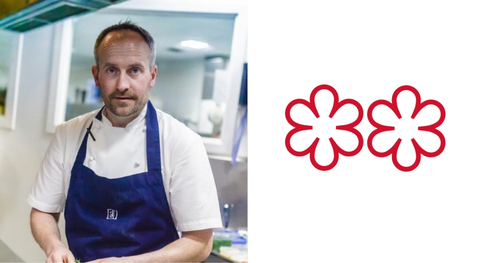
The Andrew Fairlie Method: Scottish Produce Meets French Precision
The culinary world often celebrates chefs who push boundaries, innovate, and leave an indelible mark on gastronomic history. Among them, Andrew Fairlie stands as a towering figure, a Scottish icon who masterfully fused the rich bounty of his homeland with the exacting standards of classical French cuisine. His journey from a working-class Perth upbringing to helming Scotland’s only two-Michelin-starred restaurant at Gleneagles is a testament to unwavering dedication, a profound respect for ingredients, and a singular vision that transformed Scottish fine dining forever. The "Andrew Fairlie Method" wasn't just a cooking style; it was a philosophy, an elevation of local produce through precision, passion, and an understated elegance that earned him international acclaim.
From Humble Kitchens to Culinary Revelation: The Making of Andrew Fairlie Chef
Andrew Fairlie's culinary path began not in grand professional kitchens, but in the modest home he shared with his four siblings in Perth, Scotland. Born in 1963 to a family with a strong work ethic—his father, Jim, an economics lecturer and deputy leader of the SNP, and his mother, Kay, working in a shoe shop—Fairlie’s first exposure to cooking was helping his father prepare evening meals. This early, hands-on involvement with simple dishes like omelettes and mince and tatties, prompted by his mother’s late shifts, laid an informal yet crucial foundation for his future pursuits. It instilled in him an early appreciation for the act of cooking and the nourishment it provided.
The "Tarragon Moment" and Early Influences
A pivotal moment, often referred to as his "tarragon moment," occurred at age 15. Having left Perth Academy, Fairlie took a part-time job as a glass washer at the Station Hotel in Perth in 1978. It was here that he tasted a spoonful of beef chasseur sauce, enriched with mushrooms, tomatoes, and, most memorably, fresh tarragon. This flavour, so vibrant and distinct, profoundly awakened his senses and ignited a passion that would define his life. It was a revelation that transcended simple home cooking, hinting at the complexities and depths of flavour that professional cuisine could offer. This moment underscores the idea that often, the most significant culinary epiphanies come from an unexpected taste, a flavour that shifts one's perception of food entirely. For aspiring chefs, this highlights the importance of keeping an open mind and palate, as inspiration can strike from the most unexpected sources.
The Roux Scholarship and French Foundations
Fairlie’s burgeoning talent quickly became undeniable. In 1984, at the remarkably young age of 20, he made history by becoming the inaugural winner of the prestigious Roux Scholarship. This achievement wasn't merely a personal triumph; it was a gateway to the pinnacle of classical gastronomy. The scholarship provided the opportunity to train under the legendary Michel Guérard in France, a pioneer of *cuisine minceur* and a master of technique. This intensive period in France proved transformative, imbuing Fairlie with the rigorous precision, discipline, and profound understanding of culinary fundamentals that would become the hallmark of the Andrew Fairlie Method. It taught him the art of building flavour, the importance of exacting standards, and the philosophy behind French culinary excellence—lessons he would later adapt and apply to his Scottish roots. Before establishing his own empire, his tenure as head chef at One Devonshire Gardens in Glasgow from 1994 to 2001 further honed his skills, earning him his first Michelin star and cementing his reputation as a formidable talent.
The Andrew Fairlie Method: A Symphony of Scottish & French Excellence
The essence of the Andrew Fairlie Method was a harmonious marriage: the unyielding quality of Scotland’s larder meeting the refined techniques and elegant presentation of classical French cookery. Upon opening Restaurant Andrew Fairlie at Gleneagles in 2001, this philosophy became the restaurant's very soul. Fairlie’s vision was to showcase the best of Scottish produce—from pristine seafood and succulent meats to foraged ingredients and seasonal vegetables—but interpreted through a French lens that emphasized clarity, balance, and meticulous execution.
Elevating Scottish Produce with Classical Precision
What made this approach revolutionary was its dedication to elevating indigenous ingredients. Prior to Fairlie, Scottish fine dining was often perceived as less ambitious, sometimes overshadowed by traditional, hearty fare. The Andrew Fairlie Chef, however, demonstrated that local produce, given the proper respect and technical finesse, could rival the finest ingredients globally. He sourced his ingredients with an almost obsessive attention to detail, establishing deep relationships with local suppliers and even cultivating his own kitchen garden. This direct connection to the source allowed him to ensure peak freshness and flavour. His classical French training meant that every ingredient was handled with care, every sauce was perfectly emulsified, every cut of meat precisely cooked. It was about enhancing, not masking, the natural brilliance of the produce. This emphasis on sourcing and technique is a valuable lesson for any aspiring chef: truly great food starts with exceptional ingredients and is perfected through masterful skill.
The Two-Michelin-Star Legacy at Gleneagles
The culmination of this method was the unprecedented success of Restaurant Andrew Fairlie. In 2002, just a year after opening, the restaurant was awarded its first Michelin star, a rapid acknowledgment of its exceptional quality. Four years later, in 2006, it earned its second, becoming the first and only establishment in Scotland to achieve such a prestigious honour. These stars were not just accolades; they were powerful affirmations of Fairlie's vision and its profound impact on the Scottish culinary landscape. They signaled a new era, demonstrating that Scottish fine dining could stand shoulder-to-shoulder with the best in the world. Beyond Michelin, the restaurant accumulated numerous other honours, including AA Chefs' Chef of the Year in 2006 and Chef of the Year at the Scottish Restaurant Awards in 2008, solidifying Fairlie's status as a culinary titan. For a deeper dive into his trailblazing career, see
Andrew Fairlie: Scotland's Two-Michelin-Star Culinary Pioneer.
Gastronomic Diplomacy: Andrew Fairlie Chef at the G8 Summit
One of the most iconic moments in Andrew Fairlie's career, and a powerful validation of his culinary philosophy, occurred in July 2005. The luxury Gleneagles Hotel was hosting the G8 summit, bringing together world leaders from across the globe. Despite being in recovery from an operation to remove a brain tumour, Andrew Fairlie Chef was tasked with preparing two consecutive banquets for an array of distinguished guests, including Tony Blair, George Bush, Vladimir Putin, and Her Majesty The Queen.
Challenging Stereotypes with Exquisite Cuisine
The challenge was made all the more intriguing by recent remarks from French President Jacques Chirac, who, a few days prior, had publicly disparaged British cooking. Chirac had been quoted in *Libération* newspaper stating, "You can't trust people who cook as badly as that. After Finland, it's the country with the worst food." He had even added a particularly stinging remark about "mad cow disease" being the only British contribution to European agriculture. Fairlie, a French-trained chef known for his restaurant being among Britain's finest, was naturally taken aback. This set the stage for a unique form of gastronomic diplomacy. Through his exquisite menus, Fairlie aimed to, and succeeded in, refuting Chirac's outdated stereotypes. His banquets were a masterclass in showcasing the quality of Scottish produce, prepared with the precision and elegance he had perfected. He demonstrated that British, and specifically Scottish, food, far from being the worst, could be truly world-class. For more details on this remarkable episode, explore
Andrew Fairlie at G8: Chef Who Defied French Food Critics.
A Testament to Resilience and Skill
The success of the G8 banquets, delivered under immense pressure and while Fairlie was still recovering, speaks volumes about his resilience and unwavering commitment to excellence. It was a powerful statement about the quality of his food and the capability of Scottish fine dining. This event cemented his reputation not just as a gifted chef, but as a culinary ambassador for his country, capable of delivering perfection even in the most demanding circumstances. It also highlighted his professionalism; his focus remained on the food and the experience, rather than succumbing to the political theatrics or his personal health challenges.
The Enduring Legacy of Andrew Fairlie: More Than Just a Chef
Andrew Fairlie passed away in January 2019 at the age of 55, but his legacy continues to thrive, impacting both the Scottish culinary scene and the wider world of fine dining. Throughout his career, Fairlie maintained a notably low public profile, consciously choosing to focus his energy on culinary excellence rather than media pursuits. This dedication to his craft, rather than celebrity, underscores his profound commitment to the art of cooking itself.
A Quiet Pioneer with Profound Impact
Fairlie was a quiet pioneer. He advanced Scottish fine dining during a period when the landscape was ripe for transformation. His success proved that Scotland had the ingredients, the talent, and the potential to compete on the global stage. He didn't just win stars; he inspired a movement, encouraging other chefs to look inward to Scotland's larder and apply rigorous standards to their craft. His method of blending the best of French technique with the best of Scottish produce became a blueprint, a standard of excellence that many now aspire to. For young chefs today, Fairlie’s career serves as a powerful reminder that genuine achievement stems from mastering fundamentals, respecting ingredients, and maintaining an unwavering focus on quality, rather than fleeting trends or media attention.
Inspiring a New Generation of Scottish Fine Dining
The impact of Andrew Fairlie Chef extends far beyond the walls of his restaurant. He cultivated a culture of excellence and mentorship, fostering a new generation of Scottish chefs who carry forward his dedication to quality and innovation. His restaurant at Gleneagles, which continues to hold its two Michelin stars, stands as a living testament to his vision and standards. It embodies the principle that true gastronomic greatness is built on authenticity, precision, and a deep appreciation for both tradition and terroir. Fairlie’s contributions have ensured that Scottish cuisine is no longer a punchline but a respected and celebrated part of the international culinary conversation, forever changed by his quiet, masterful hand.
Conclusion
Andrew Fairlie was more than just a chef; he was a visionary, a trailblazer, and a proud ambassador for Scottish gastronomy. From his early "tarragon moment" to his groundbreaking two-Michelin-star restaurant at Gleneagles and his triumph over gastronomic diplomacy at the G8 summit, his career exemplified a relentless pursuit of perfection. The Andrew Fairlie Method—the seamless integration of Scotland’s abundant produce with the precision of classical French techniques—did not just earn him accolades; it reshaped the culinary identity of a nation. His legacy continues to inspire, reminding us that with passion, respect for ingredients, and unwavering dedication, culinary excellence knows no bounds.