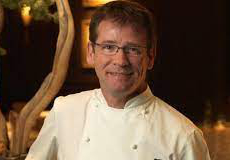
Andrew Fairlie at G8: The Scottish Chef Who Silenced Critics with Culinary Brilliance
In July 2005, the world's gaze was fixed on the serene, picturesque landscapes of Gleneagles, Scotland, as it hosted the G8 summit. Leaders of the world's most powerful nations, including Tony Blair, George Bush, Vladimir Putin, and Queen Elizabeth II, gathered amidst tight security and global media attention. Beyond the high-stakes political negotiations, another, more subtle form of diplomacy was unfolding in the resort's kitchens, orchestrated by none other than the late, great Andrew Fairlie, chef extraordinaire. This was not merely about feeding dignitaries; it was about national pride, culinary reputation, and proving that Scottish gastronomy could stand shoulder-to-shoulder with the world's best, even in the face of snide remarks from a French President.
The stage was set for a unique gastronomic showdown, largely due to comments made by French President Jacques Chirac just days before the summit. Chirac, known for his love of French cuisine, famously quipped to the Libération newspaper, after a meeting with Putin in Russia: “You can’t trust people who cook as badly as that. After Finland, it’s the country with the worst food.” He then added a stinging “coup de grace” about British agriculture. These remarks, a classic "Frogs v Rosbifs" culinary jab, ignited a quiet determination in the kitchens of Restaurant Andrew Fairlie at Gleneagles, where the eponymous chef, a master of French techniques himself, was tasked with creating two consecutive banquets for the assembled global elite.
The Culinary Pedigree of Andrew Fairlie, Chef Pioneer
To fully appreciate the significance of this moment, one must understand the background of Andrew Fairlie, chef and visionary. Born in Perth, Scotland, in 1963, Fairlie's culinary journey began modestly, assisting his father with family meals. A pivotal "tarragon moment" at age 15, tasting a perfectly balanced beef chasseur sauce, ignited a lifelong passion for flavour and precision.
Fairlie's ascent in the culinary world was meteoric. He was the inaugural winner of the prestigious Roux Scholarship in 1984 at just 20 years old, an achievement that propelled him into the echelons of classical French training under the legendary Michel Guérard. This formative experience instilled in him an unwavering commitment to technique, discipline, and the pursuit of perfection. Returning to Scotland, he quickly made his mark, earning a Michelin star at One Devonshire Gardens in Glasgow before opening his own eponymous restaurant at Gleneagles in 2001. This venture quickly became Scotland's first and only establishment to achieve two Michelin stars, a testament to his groundbreaking work blending classical French methods with the finest Scottish produce.
Despite recovering from an operation to remove a brain tumour, Fairlie faced the G8 challenge with characteristic calm. He understood the gravity of the occasion and the unspoken expectation to present a meal that would not only impress but also subtly refute the criticisms hurled by President Chirac. His reputation as Andrew Fairlie: Scotland's Two-Michelin-Star Culinary Pioneer was already cemented, but this was a global stage unlike any other.
Gastronomic Diplomacy at the G8 Summit
The G8 summit was an extraordinary logistical and diplomatic undertaking, and the food served was an integral part of the experience. For two consecutive evenings, on July 6 and 7, 2005, Andrew Fairlie, chef, and his team were responsible for crafting banquets that needed to be impeccably executed, culturally appropriate, and undeniably delicious. The pressure was immense, not least because one of the guests was the very man who had publicly derided British cooking.
Fairlie's approach was a masterclass in quiet confidence. Instead of attempting to emulate French cuisine directly, he leveraged his unique culinary philosophy: a harmonious marriage of classical French techniques with the unparalleled quality of Scottish ingredients. This wasn't about proving Scottish food was "as good as" French; it was about showcasing that Scotland possessed its own distinct, world-class culinary identity, capable of producing dishes of exquisite refinement and profound flavour.
Imagine the scene: Jacques Chirac, seated amongst world leaders, presented with a menu carefully curated by a Scottish chef, trained in France, who had built his reputation on precision and the finest local produce. Every dish served was a subtle act of gastronomic diplomacy, a silent counter-argument to Chirac's disparaging remarks. The precision of the cooking, the depth of flavour, and the elegant presentation spoke volumes, far more effectively than any verbal retort.
The Andrew Fairlie Method: A Culinary Statement
The heart of Andrew Fairlie, chef's success at the G8, and throughout his career, lay in what can be described as The Andrew Fairlie Method: Scottish Produce Meets French Precision. This was not a fusion in the casual sense but a profound understanding of how to elevate exceptional ingredients through expert application of technique. For the G8 dinners, this would have meant showcasing Scotland's larder at its absolute peak:
- Seafood: Scotland's pristine waters yield some of the best shellfish and fish in the world – think langoustines, scallops, turbot. Fairlie's delicate handling would highlight their natural sweetness and texture.
- Game and Meat: From Highland venison to prime Scotch beef, these ingredients, often robust in flavour, would be transformed with French cooking methods, ensuring tenderness and complexity.
- Seasonal Vegetables and Herbs: Fairlie was known for his dedication to seasonality, meaning fresh, vibrant produce, perhaps from local Scottish farms, would accompany main dishes with thoughtful consideration.
His cooking was characterised by:
- Flavour First: Every element on the plate was there to enhance the central flavour, never to distract.
- Technical Mastery: Sauces were rich and perfectly emulsified, meats cooked to ideal temperatures, and textures balanced for optimal enjoyment.
- Elegant Simplicity: While technically complex, his dishes always appeared effortless and understated, allowing the quality of the ingredients to shine.
This culinary philosophy was the perfect antidote to Chirac's blanket dismissal. It demonstrated that good food isn't confined by national borders but by the skill of the chef and the quality of the ingredients. It highlighted that Britain, and specifically Scotland, possessed both in abundance.
Legacy Beyond the Summit
The G8 summit banquets were more than just two nights of exceptional dining; they were a landmark moment for Scottish cuisine. The widespread positive reception, though not always explicitly reported in detail due to the political nature of the event, solidified Fairlie's reputation on an international stage. He proved, without needing to say a word, that Scottish food, when handled by a chef of his caliber, was not just good, but truly world-class.
Andrew Fairlie, chef, maintained a low public profile, preferring to let his food do the talking. Yet, this event thrust him into the limelight, showcasing his quiet confidence and unwavering dedication to excellence. His defiance of the French food critics wasn't an act of rebellion but a testament to his belief in his craft and the produce of his homeland. He elevated Scottish fine dining, inspiring a generation of chefs to explore and celebrate their culinary heritage.
Beyond the G8, Fairlie continued to garner accolades, including AA Chefs' Chef of the Year and Chef of the Year at the Scottish Restaurant Awards. His restaurant remained a beacon of culinary excellence until his untimely passing in 2019. The memory of him preparing those G8 banquets, recovering from illness yet unfazed by the global spotlight and a French president's jibe, perfectly encapsulates the quiet strength and immense talent of this extraordinary Scottish chef.
Conclusion: A Culinary Icon's Enduring Statement
The G8 summit in 2005 presented Andrew Fairlie, chef, with a unique platform to make a profound statement about Scottish cuisine. In the face of critical remarks from a prominent world leader, Fairlie did not resort to polemics or overt nationalism. Instead, he chose the language he knew best: food. Through his exquisite banquets, meticulously prepared using classical French techniques applied to the finest Scottish produce, he delivered a silent yet powerful rebuttal. He demonstrated that culinary excellence knows no geographical bounds and that Scotland was, and is, a significant player on the global gastronomic stage. Andrew Fairlie's legacy is not just about Michelin stars or prestigious awards; it is about proving, with unwavering dedication and immense talent, that truly great food transcends prejudice and speaks for itself, leaving an indelible mark on all who taste it.